
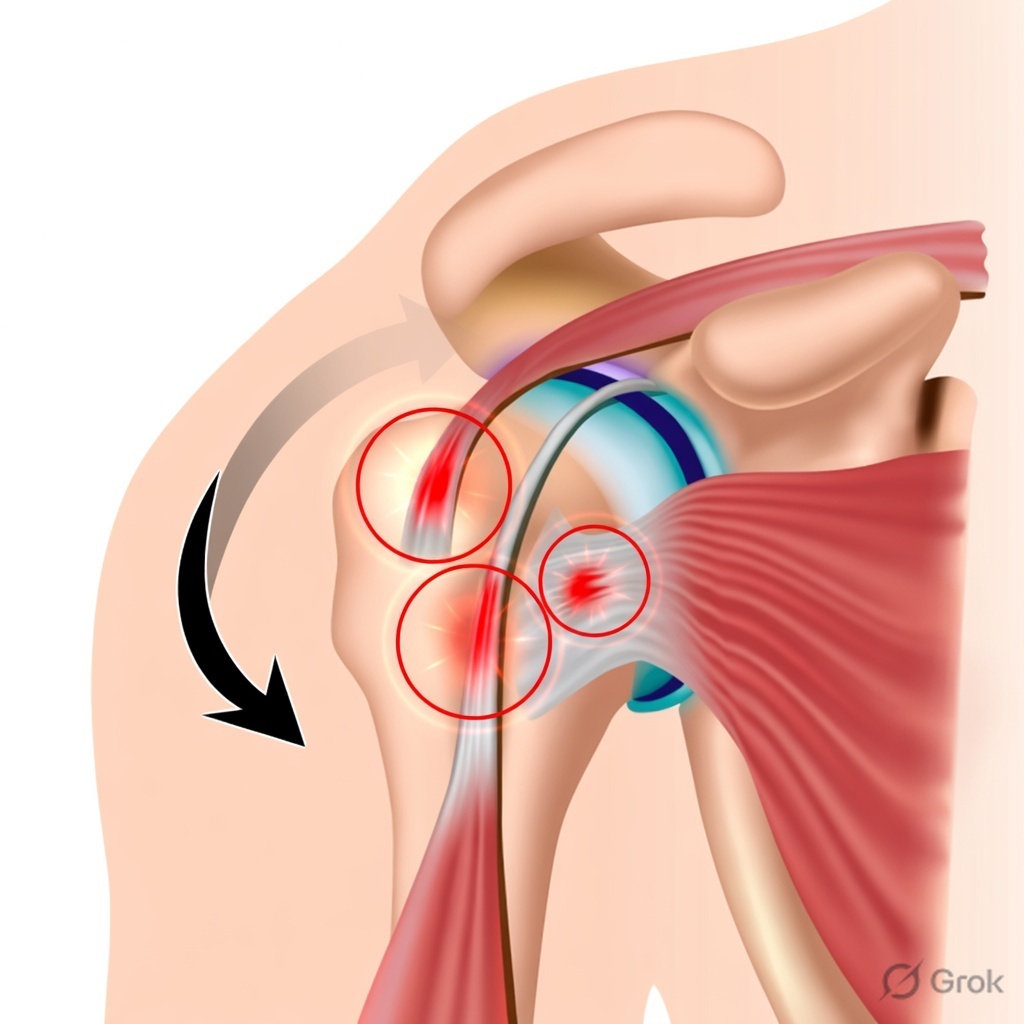
What is Supraspinatus Tendinitis?
If you feel a sharp pain in your shoulder when reaching for a seatbelt or lifting a grocery bag, you likely have supraspinatus tendinitis.
The supraspinatus is one of the four muscles that make up your rotator cuff. It is the most commonly injured muscle in the shoulder because it passes through a narrow space beneath the acromion bone. When this tendon becomes inflamed or irritated—often due to repetitive overhead motion—it leads to what is medically known as Supraspinatus Tendinitis (or Swimmer’s Shoulder).
“The shoulder is the most mobile joint in the human body, but that mobility comes at the cost of stability. Healing the supraspinatus isn’t just about resting; it’s about teaching the shoulder how to move correctly again.”
— Dr. Kevin Wilk, Renowned Physical Therapist & Sports Medicine Expert
Recognizing the Symptoms
How do you know if your shoulder pain is specifically the supraspinatus? Look for these “Painful Arc” signs:
- The 60-120 Degree Mark: Pain is most intense when lifting your arm out to the side between shoulder height and overhead.
- Night Pain: Difficulty sleeping on the affected side.
- Radiating Pain: A dull ache that travels from the top of the shoulder down to the outside of the upper arm (but rarely past the elbow).
- Weakness: Feeling like your arm “gives out” when trying to lift a heavy object.
2026 Treatment Protocols: From Rest to Rehab
Modern sports medicine has moved away from complete immobilization. The goal today is “Optimal Loading.”
1. The First 72 Hours: Cooling the Fire
- Relative Rest: Avoid overhead lifting, but keep the arm moving in small, pain-free circles (Pendulum exercises).
- Ice vs. Heat: Use ice for 15 minutes after activity to dull the ache, and moist heat before stretching to increase blood flow.
- Posture Correction: Use a small pillow under the arm while sleeping to keep the tendon in a “neutral” position.
2. Physical Therapy & Strengthening
Evidence-based rehab now focuses on Scapular Stabilization. If your shoulder blade doesn’t move correctly, your supraspinatus will always be overworked.
- The “Full Can” Exercise: Lifting a light weight (or empty can) at a 30-degree angle to the front.
- External Rotations: Using a resistance band to strengthen the infraspinatus and teres minor, which support the supraspinatus.
The Difference Between Tendinitis and Impingement
While often used interchangeably, impingement syndrome occurs when the bone “pinches” the tendon, whereas tendinitis is the actual inflammation of the tendon tissue itself. Left untreated, acute tendinitis can progress to a rotator cuff tear.
Common Causes & Risk Factors
Supraspinatus tendinitis isn’t just for athletes. In 2026, we see a rise in cases due to:
- “Tech Neck” Mechanics: Poor posture at a desk rolls the shoulders forward, narrowing the subacromial space.
- Repetitive Overhead Work: Painters, carpenters, and swimmers are at the highest risk.
- Age-Related Wear: After age 40, blood flow to the rotator cuff naturally decreases, making the tendons more prone to micro-tears.
- Sudden Load: Lifting a heavy suitcase or a sudden “jerk” on the arm.
Advanced Options: When Conservative Care Fails
If the pain persists beyond 6–8 weeks, specialists may recommend:
- Shockwave Therapy (ESWT): Using sound waves to stimulate healing in the tendon.
- PRP (Platelet-Rich Plasma): Using your own blood’s growth factors to “jumpstart” repair.
- Corticosteroid Injections: Useful for breaking the cycle of pain so you can perform physical therapy, though limited to 1-2 per year.
Frequently Asked Questions about Supraspinatus Tendinitis
How long does supraspinatus tendinitis take to heal? With consistent physical therapy and proper load management, mild cases typically improve in 4 to 6 weeks. Severe or chronic cases may take 3 to 6 months for full recovery.
Can I exercise with supraspinatus tendinitis? Yes, but you must modify your routine. Avoid overhead pressing and wide-grip movements. Focus on “pain-free” range of motion and scapular strengthening exercises like face pulls or rows.
Is surgery necessary for a supraspinatus injury? Surgery is usually a last resort. Most patients find relief through conservative treatments like physical therapy, activity modification, and occasionally PRP injections. Surgery is typically only considered if there is a full-thickness tear or no improvement after 6 months of rehab.