What is Gluteal Tendinopathy?
If you experience a dull, aching pain on the outside of your hip that worsens when you lie on your side or climb stairs, you may be dealing with gluteal tendinopathy.
This condition involves the tendons of the gluteus medius and gluteus minimus muscles where they attach to the bony bump on the side of your hip (the greater trochanter). In 2026, medical professionals categorize this under the broader term Greater Trochanteric Pain Syndrome (GTPS).
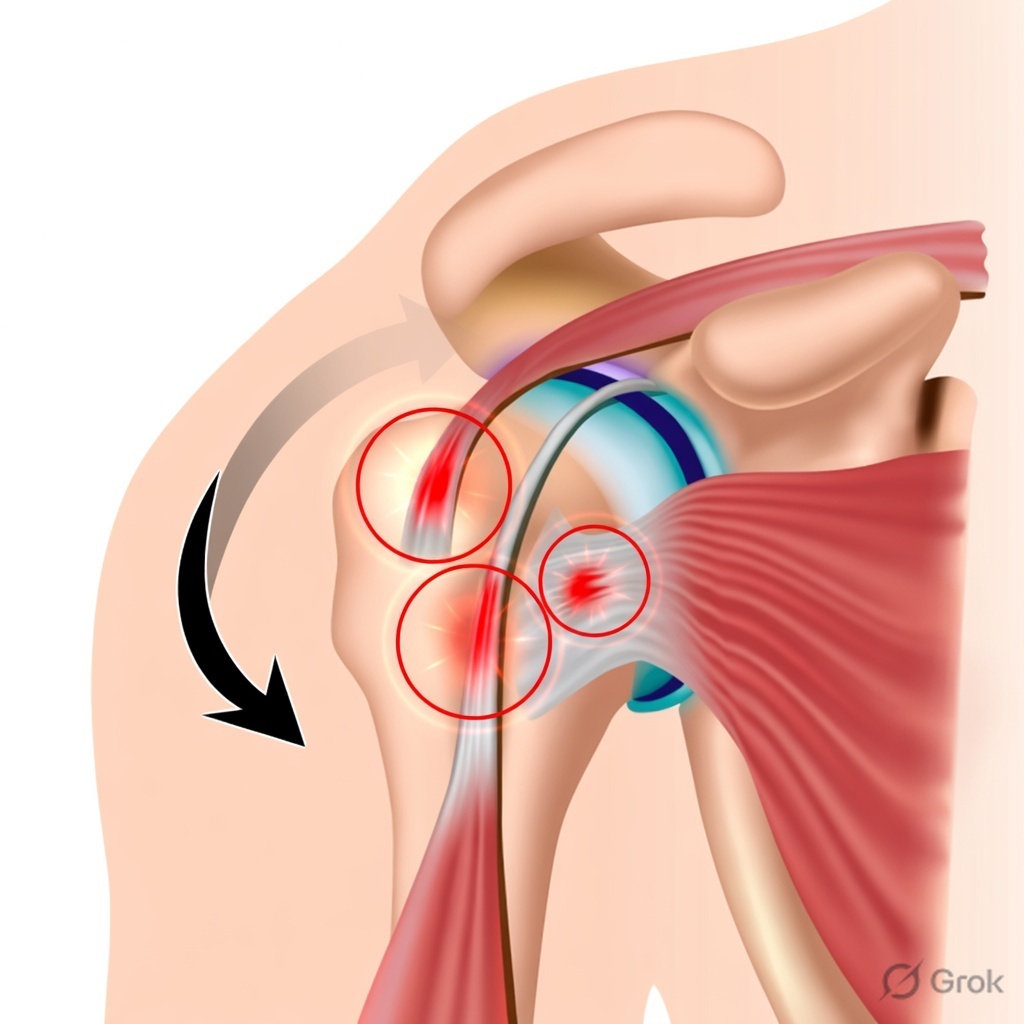
The supraspinatus is one of the four muscles that make up your rotator cuff. It is the most commonly injured muscle in the shoulder because it passes through a narrow space beneath the acromion bone. When this tendon becomes inflamed or irritated—often due to repetitive overhead motion—it leads to what is medically known as Supraspinatus Tendinitis (or Swimmer’s Shoulder).
“The shoulder is the most mobile joint in the human body, but that mobility comes at the cost of stability. Healing the supraspinatus isn’t just about resting; it’s about teaching the shoulder how to move correctly again.”
— Dr. Kevin Wilk, Renowned Physical Therapist & Sports Medicine Expert
Gluteal Tendinopathy vs. Hip Bursitis
For years, lateral hip pain was simply called “bursitis.” However, recent clinical research shows that the primary issue is usually the tendon, not the bursa. While the bursa may be inflamed, it is often a secondary symptom of the tendon being overloaded
Recognizing the Symptoms of Lateral Hip Pain
Gluteal tendinopathy has very specific “trigger” positions. Look for these signs:
- Side-Lying Pain: Intense discomfort when lying directly on the affected hip at night.
- The “Crossed-Leg” Ache: Pain when sitting with your legs crossed (this compresses the tendon).
- Weight-Bearing Pain: Aching when standing on one leg (e.g., putting on socks) or climbing stairs.
- Morning Stiffness: A feeling of “rustiness” in the hip that improves slightly after a few minutes of walking.
Common Causes: Why Your Hip Tendons Are Protesting
In 2026, we focus on “Compression + Load” as the main cause of this injury:
- Sudden Activity Spikes: Increasing your walking or running mileage too quickly.
- Compression Mechanics: Regularly standing with your weight shifted to one hip (“hanging on the hip”) or sleeping in a way that pulls the top leg across the body.
- Hormonal Changes: There is a strong link between perimenopause/menopause and gluteal tendinopathy due to changes in estrogen levels affecting tendon health.
- Weak Kinetic Chain: If your core or calf muscles are weak, the gluteal tendons often overcompensate to stabilize the pelvis.
Modern Treatment Protocols for 2026
The “Gold Standard” for gluteal tendinopathy is no longer complete rest or stretching; it is Progressive Loading.
Phase 1: Load Modification (The “Don’ts”)
- Stop Stretching: Unlike a tight muscle, a painful gluteal tendon hates being stretched. Avoid the “pigeon pose” or “figure-four” stretch, as these compress the tendon further.
- Sleep with a Pillow: Place a thick pillow between your knees when sleeping on your side to keep the hip in a neutral position.
Phase 2: Isometric Loading
Start with exercises where the muscle works without moving the joint.
- Side-Lying Isometric: Gently push your top ankle into a wall or pillow while lying on your side. Hold for 30–45 seconds.
Phase 3: Heavy Slow Resistance (HSR)
Once the pain stabilizes, move to slow, weighted movements:
- Weighted Step-ups: Slow and controlled.
- Side-Lying Hip Abduction: Lifting the leg toward the ceiling with a light ankle weight.
Best Exercises for Gluteal Rehab
- Wall Squats with Abduction: Squat against a wall while pushing your knees outward against a resistance band.
- Glute Bridges: Focus on keeping the pelvis level to ensure the glute medius is firing correctly.
- Clamshells (Modified): Perform these with the hip in a neutral, rather than flexed, position to avoid compression.
Frequently Asked Questions (FAQ)
How long does gluteal tendinopathy take to heal?
Because tendons have a low blood supply, recovery is slow. Expect 3 to 6 months of consistent rehab for significant improvement.
Should I get a cortisone shot for my hip pain?
In 2026, specialists suggest caution. While a steroid shot may provide short-term relief (4–6 weeks), it does not fix the underlying tendon weakness and may increase the risk of a tear if used repeatedly.